

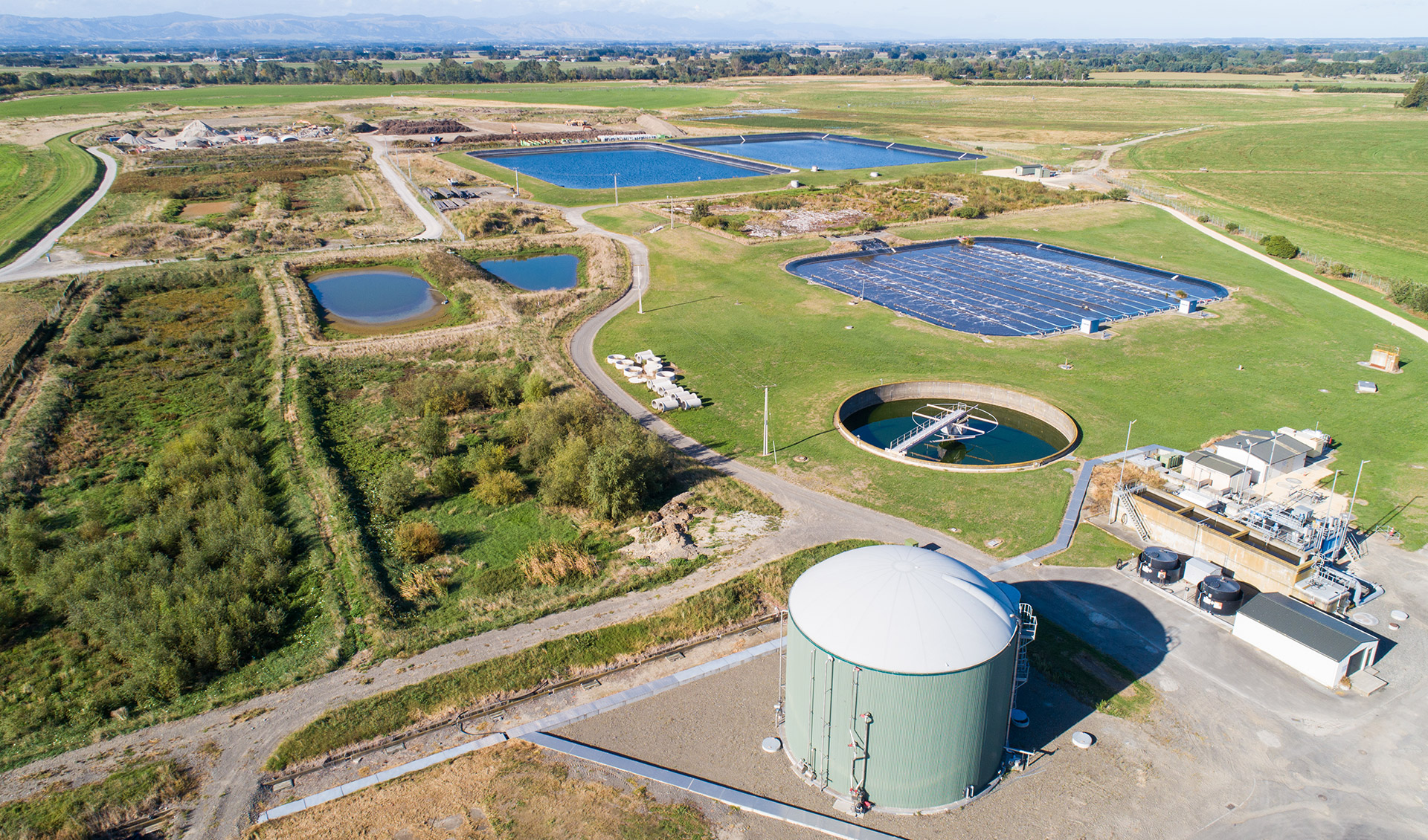
Managing Our Wastewater
The best way to manage treated wastewater isn't necessarily the same all year round.
Our dual discharge system is designed to work with the seasons. During the warmer, drier months, treated wastewater and its nutrients are put to productive use through irrigation to land. During the wetter winter months, it passes through our constructed wetlands before reaching the Ōroua River.
Together, these two approaches allow us to make better use of our resources, reduce the amount of treated wastewater discharged directly to the river and continually improve environmental outcomes for the district.

Winter: through the constructed wetlands
During the wetter winter months, treated wastewater passes through our constructed wetlands before reaching the Ōroua River. In fact, it’s the largest known constructed wetlands in New Zealand.
The wetlands add a natural treatment step to the process. Two large, shallow wetland bays allow the treated wastewater to slowly move through vegetation and have contact with the land, helping remove remaining nutrients before the water reaches the river.
More than 80,000 native plants have been planted across the wetlands, with species selected for their treatment properties to help naturally remove nutrients such as nitrogen and phosphorus.
The wetlands can receive more than six million litres of treated wastewater each day, with water taking around three days to travel through the system.
But the wetlands value goes beyond wastewater treatment. They are creating new habitat for native birds and aquatic life, while helping us reduce our impact on the Ōroua River.
It’s a large scale environmental solution here in the Manawatū, using natural processes to improve how we manage wastewater and deliver better outcomes for the river and the environment around it.
In numbers
- More than 80,000 native plants
- Two constructed wetland bays
- More than six million litres of treated wastewater able to pass through each day
- Around three days for water to travel through the wetlands

Summer: irrigation to land
During the summer irrigation season, treated wastewater from the Manawatū Wastewater Treatment Plant is applied to Council-owned land.
Council owns around 200 hectares of land surrounding the treatment plant, with wastewater applied using five pivot irrigators and three large travelling irrigators.
The treated wastewater contains nutrients that can be put to productive use. Grass grown on irrigated land are harvested by local contractors and used on local farms.
Irrigation has been part of our wastewater management system since November 2019 and has significantly reduced the amount of nutrients discharged to the Ōroua River.
In numbers
- 200 hectares of Council-owned land
- Five pivot irrigators
- Three travelling irrigators
- Irrigation operating since 2019
Working with mana whenua
The Ōroua River has significant cultural importance to mana whenua.
Council partnered with Ngāti Kauwhata in the development of the constructed wetlands and included a blessing of the land before work began.
The wetlands are part of our wider commitment to improving the way wastewater is managed and reducing its impact on the river.